💧The Silent Killer at Every Event — And No One’s Talking About It 💧
By Venkat Ankam,
Dha3R NGO
Last month, I attended two different events. Two celebrations. Two crowds. Two setups.
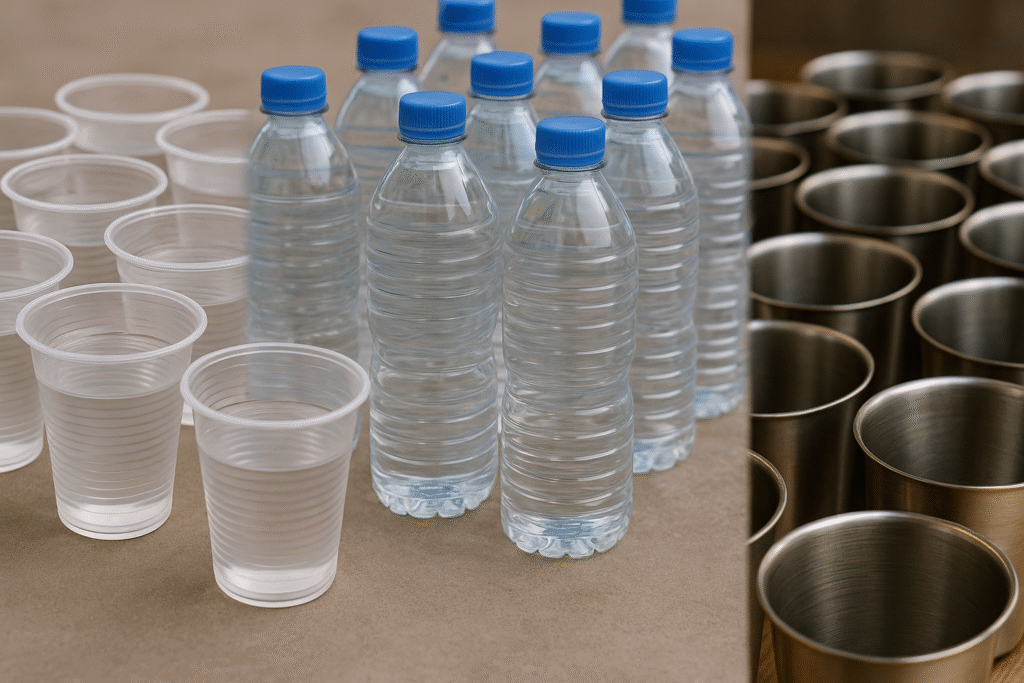
At the first event, there were simple one-time-use plastic cups placed next to a water dispenser. People walked up, filled them or picked up filled cups, drank, and moved on. No fanfare. No wasteful glitz. Just water.
At the second event, it was slightly different. Alongside the plastic cups were hundreds of half-litre plastic water bottles stacked neatly, gleaming under the lights like trophies. Without hesitation, 99% of the people grabbed a bottle, even when cups were available. A few missed the bottles initially, grabbed cups in a rush, only to come back later and “correct” their mistake. Some carried the bottles home like party favours.
Not a single person said,
“Hey, where are the bottles?” at the first event.
Not a single person said,
“Why did you give us bottles?” at the second.
Nobody asked. Nobody questioned.
Because in one event, the organisers didn’t create the problem — and in the other, they made it worse by offering it.
That’s when it hit me.
The participants didn’t “need” the water bottles.
They didn’t even “want” them—until they saw them.
They took them because they were there.
Because it was easier.
Because it felt cleaner.
Because the organiser made them feel like it was the “better” thing to do.
But here’s the truth we don’t want to admit:
Those convenient bottles are poison gift-wrapped in plastic.
You’re not sipping clean, pure water.
You’re sipping microplastics, chemicals, and months of heat-soaked stagnation.
FSSAI classifies bottled water as a high-risk food.
And yet, we serve it to our guests.
Proudly.
Why?
Because somewhere deep down, organisers believe that keeping bottled water makes their event look premium. It screams “We can afford it.”
But what it really screams is “We didn’t care enough.”
Which event was better? Event 1 or 2?
The saddest part is both events failed.
Both polluted.
Both showed the same lack of awareness, just in different packaging.
One polluted quietly, the other did it glamorously.
But then… I went to a third event.
No plastic.
No bottles.
Just rows of shining steel glasses, neatly washed, reused, cared for.
Zero waste.
Zero harm.
People noticed. People applauded. People remembered.
At this event, water didn’t just quench thirst — it opened eyes and changed minds.
“This wasn’t just water — it was a wake-up call served in steel.“
So here’s the reality:
If you’re an organiser giving bottled water, you’re not serving convenience.
You’re handing out disease, polluting the earth, and reinforcing a toxic habit.
If you’re a participant choosing bottled water when better options exist, you’re part of the problem.
We don’t need more bottles.
We need more courage to break free from plastic privilege.
Next time you host a function—ask yourself:
Are you building memories or just more garbage?
Don’t let your celebration become the planet’s burden.
Think of this as your warning.
Because the real danger isn’t just the plastic — it’s our silence or lack of knowledge or courage to break free.